A Deep Dive into Spun Aluminum Alloys What You Need to Know
Understanding Spun Aluminum Alloys
What is Spun Aluminum?
Spun aluminum refers to aluminum formed through metal spinning, a process that shapes flat discs or tubes into precise cylindrical or conical parts. Manufacturers start with spun Al blanks and apply pressure against a rotating mandrel to create seamless components. This technique produces spun aluminum alloys suitable for tanks, enclosures, and structural elements where uniformity matters. Spinning aluminum alloy avoids welds and joints that weaken other fabrication methods, delivering consistent wall thickness across the finished piece.
Metal spinning operates on principles of plastic deformation, where localized pressure from rollers or tools causes the aluminum to flow along the mandrel contour without significant material removal. Common starting materials include aluminum alloys such as 1100 for high formability, 3003 for moderate strength, and 5052 for enhanced corrosion resistance in marine environments. The process accommodates diameters from a few inches up to over ten feet, making it versatile for both miniature fittings and large-scale industrial vessels. Because the material remains continuous, spun parts exhibit superior pressure ratings compared to fabricated alternatives that rely on seams.
Properties of Spun Aluminum Alloys
Spun aluminum alloys combine the natural corrosion resistance of aluminum with enhanced strength from controlled deformation during the metal spinning process. These alloys maintain high ductility while gaining work-hardened surfaces that resist fatigue. Lightweight characteristics make them ideal for applications demanding reduced mass without sacrificing durability. The resulting spinnings exhibit excellent thermal conductivity and electrical properties, allowing use in heat exchangers and electronic housings where heat dissipation proves critical.
During spinning, the aluminum undergoes strain hardening that increases tensile strength by 20 to 50 percent depending on the alloy and reduction ratio. Yield strength rises while elongation remains sufficient for secondary forming operations. Thermal conductivity stays near 200 W/m·K for most alloys, enabling efficient heat transfer in applications such as condenser shells or LED reflectors. Electrical conductivity typically exceeds 50 percent IACS, supporting use in radar housings and electromagnetic shielding enclosures. Surface finishes achieved directly from spinning often reach 32 microinches Ra, reducing the need for additional polishing in many functional parts.
Benefits of Using Spun Aluminum
Spun aluminum delivers seamless construction that eliminates leak paths in tanks and pressure vessels. Its lightweight nature reduces overall assembly weight, improving fuel efficiency in transportation equipment. Metal spinning creates complex geometries in a single operation, cutting production time compared to multi-step machining. The process also supports rapid prototyping and low-volume runs, giving engineers flexibility when testing new designs for industrial or aerospace use.
Additional advantages include excellent repeatability once the mandrel and tooling are established, with dimensional tolerances routinely held to ±0.015 inches on diameters up to 48 inches. The absence of heat-affected zones preserves the base alloy’s corrosion performance, unlike welding processes that can create anodic sites. Spun parts also demonstrate superior vibration damping because the continuous grain flow absorbs energy more effectively than cast or stamped equivalents. These characteristics collectively reduce warranty claims in high-cycle environments such as compressor housings and exhaust components.
The Metal Spinning Process
Overview of Metal Spinning
Metal spinning transforms flat aluminum sheets into rotationally symmetric shapes through localized pressure and rotation. Operators mount the workpiece on a lathe-style machine and press it against a mandrel using rollers or tools. This method works well for spun metal aluminum parts ranging from small fittings to large tank heads. The technique preserves material integrity while achieving tight tolerances that stamping often cannot match on curved surfaces.
Modern CNC spinning lathes incorporate servo-controlled rollers that follow programmed paths, enabling complex profiles such as parabolic reflectors or multi-diameter housings in a single setup. Hydraulic assist systems apply forces up to 20 tons, allowing thicker starting blanks up to 0.375 inches. The process can be performed hot or cold; cold spinning is preferred for aluminum to maintain surface quality, while hot spinning at 400–600 °F improves formability for harder alloys. Both variants produce parts with consistent concentricity better than 0.010 inches TIR.
Step-by-Step Guide to Spinning Aluminum
Spinning aluminum alloy begins with selecting the proper alloy disc and securing it to the spinning lathe. The operator brings the mandrel into contact and gradually applies force with a forming tool, moving from center outward. Multiple passes refine the shape while maintaining even thickness. Cooling lubricants prevent overheating during extended runs. Final trimming and finishing complete the spun aluminum component, ready for anodizing or coating.
Initial blank preparation involves laser or waterjet cutting to precise diameters, often with a 1–2 percent oversize allowance for material flow. The first pass establishes the basic contour at low speed (200–400 RPM) to avoid wrinkling. Subsequent passes increase speed to 800–1200 RPM while applying lubricant such as synthetic wax emulsions or chlorinated oils. Thickness is monitored with ultrasonic gauges to ensure uniform reduction, typically limited to 30–40 percent per pass. After forming, parts are trimmed on the same machine using dedicated cutting tools, then deburred and inspected for surface defects before heat treatment or coating.
Comparison with Metal Stamping
Metal stamping excels at high-volume flat or simple bent parts, yet it struggles with deep draws or seamless curves that spinning aluminum produces easily. Spun aluminum avoids the need for expensive progressive dies and reduces material waste from blanking operations. While stamping offers speed on repetitive runs, metal spinning delivers superior strength through grain flow alignment and handles larger diameters without additional tooling investment.
Stamping requires matched die sets costing tens of thousands of dollars, whereas spinning tooling consists primarily of a reusable mandrel and a handful of rollers. For production volumes below 5,000 units, spinning typically shows 30–60 percent lower per-part cost. In addition, stamping often introduces residual stresses that cause spring-back on curved surfaces, while spinning work-hardens the material in a controlled manner that improves fatigue life. Large-diameter components exceeding 60 inches are impractical to stamp but routine to spin on vertical or horizontal lathes.
Applications of Spun Aluminum Alloys
Common Uses in Industry
Spun aluminum appears in lighting reflectors, HVAC components, and automotive trim where smooth surfaces and precise diameters matter. Aerospace firms rely on spun aluminum alloys for ducting and fairings that require both lightness and structural integrity. The process supports rapid iteration for custom machinery guards and covers, giving fabricators a cost-effective route to prototypes that later scale to production volumes.
Additional industrial uses include radar antenna dishes, vacuum chamber liners, and food-processing hoppers where the non-porous surface prevents bacterial harborage. In the energy sector, spun aluminum forms wind-turbine nacelle covers and solar concentrator dishes. The ability to produce variable wall thicknesses allows designers to reinforce high-stress zones near mounting flanges while keeping the remainder lightweight, optimizing strength-to-weight ratios in demanding environments.
Spun Aluminum in Tank Manufacturing
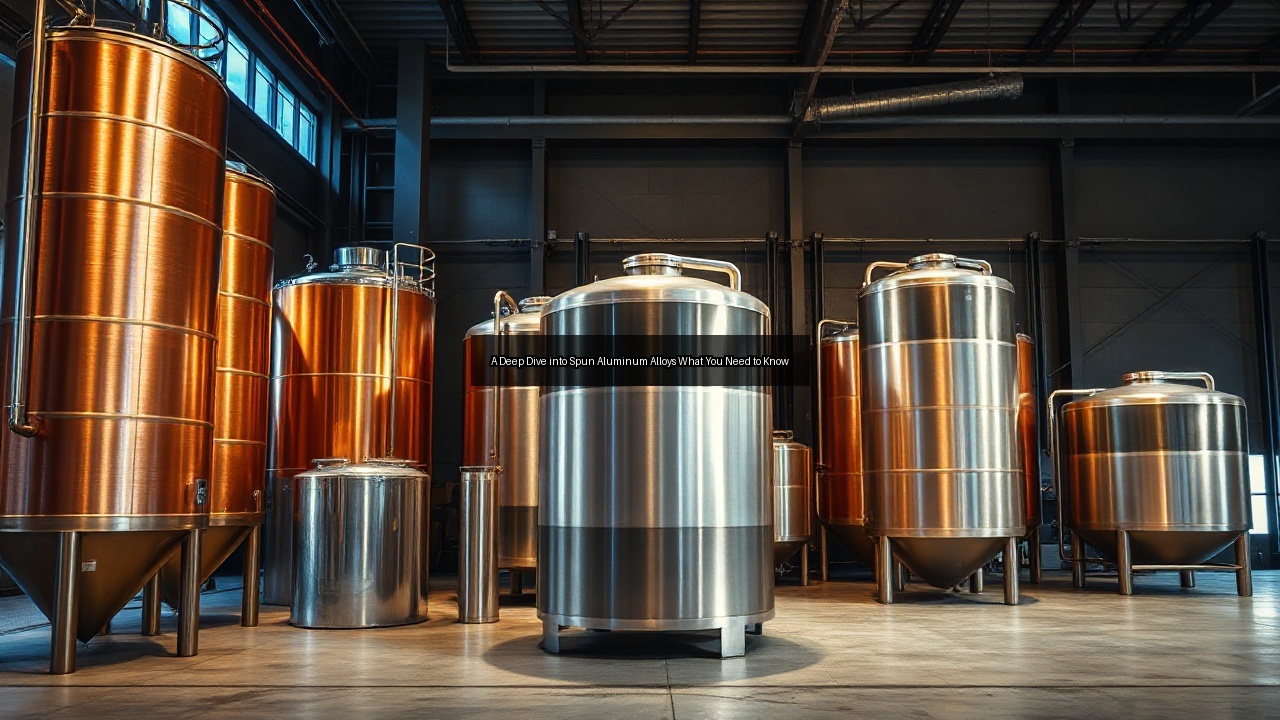
Spun aluminum tanks benefit from seamless construction that resists leaks under pressure or vibration. Manufacturers spin large-diameter cylinders and domed ends in one piece, eliminating weld seams that become failure points in traditional tank fabrication. The lightweight properties of spun aluminum reduce shipping costs and simplify installation in mobile equipment such as fuel trailers and chemical transport vessels.
Typical tank designs range from 12-inch diameter hydraulic reservoirs to 96-inch diameter cryogenic storage vessels. Wall thicknesses are varied during spinning so that the cylindrical section remains thinner while the hemispherical ends receive additional material for higher hoop stress. Post-spinning heat treatment restores ductility if required, and tanks are often finished with anodizing or powder coating for chemical compatibility. Pressure ratings up to 150 psi are routinely achieved without secondary reinforcement.
Advantages of Lightweight Spun Aluminum Components
Lightweight spun aluminum components lower overall system mass, improving payload capacity in trucks and aircraft. Reduced weight also decreases energy consumption during operation and transport. The metal spinning process allows wall thickness to vary strategically, placing more material only where stress concentrations occur. This optimization yields parts that perform reliably while using less raw material than cast or machined alternatives.
Weight savings of 40–60 percent versus equivalent steel components translate directly into fuel economy gains of 3–8 percent in long-haul trucking. In aerospace, every kilogram saved can increase range or payload by measurable margins. Strategic thickening around ports and flanges provides reinforcement without uniform over-design, reducing material usage by up to 25 percent compared with constant-thickness shells. These efficiencies also lower machining stock allowances when secondary features are required.
Cost Considerations in Spun Aluminum Production
Factors Influencing Cost
Cost drivers in spun aluminum production include alloy grade, part diameter, and required surface finish. Larger spinnings demand bigger lathes and more operator skill, raising setup expenses. Material thickness and tolerance specifications further affect cycle time and scrap rates. Tooling for complex contours adds upfront investment, yet the absence of dedicated stamping dies often keeps total project cost lower for medium volumes.
Setup time for a new part typically ranges from 4 to 16 hours, depending on contour complexity. Surface finish requirements below 16 microinches Ra may necessitate extra passes or post-process polishing, adding 10–20 percent to labor costs. Alloy premiums for high-strength tempers such as 6061-T6 can increase material cost by 30 percent over 1100-O. However, the ability to spin to near-net shape minimizes subsequent machining, often offsetting these premiums for medium-volume programs.
Cost Comparison: Spun Aluminum vs Other Metals
Spun aluminum typically undercuts stainless steel and copper on raw material price while offering comparable formability. Compared with steel, aluminum spinnings provide corrosion resistance without extra coatings, trimming long-term maintenance expenses. Metal spinning of aluminum also avoids the high tooling amortization costs associated with progressive dies used for other metals, making it competitive for runs between fifty and several thousand units.
Raw material cost for aluminum is approximately one-third that of 304 stainless steel and one-half that of copper. When lifecycle costs are considered, aluminum’s natural oxide layer eliminates the need for galvanizing or painting required by steel, saving $2–5 per square foot over ten years. For volumes of 200–2,000 pieces, spinning aluminum remains 15–35 percent less expensive than fabricating equivalent stainless components, primarily due to lower material and finishing expenses.
Budgeting for Spun Aluminum Projects
Budget planning for spun aluminum projects starts with accurate volume forecasts and tolerance requirements. Early collaboration with spinning specialists identifies design features that simplify forming and reduce cost. Prototyping in smaller quantities validates form and function before committing to production tooling. Factoring in finishing operations such as polishing or anodizing ensures the final quote reflects the complete delivered price.
Design reviews typically focus on draft angles, minimum radii, and flange widths to avoid wrinkling or tearing. Prototypes produced in lots of 5–10 pieces allow engineers to verify fit and function at 20–30 percent of production tooling cost. Once validated, production quotes incorporate volume discounts, with per-part pricing dropping 15–25 percent between 100 and 1,000 units. Including anodizing, painting, or passivation in the initial quote prevents scope changes that inflate final invoices.
Future Trends in Spun Aluminum Technology
Innovations in Alloy Development
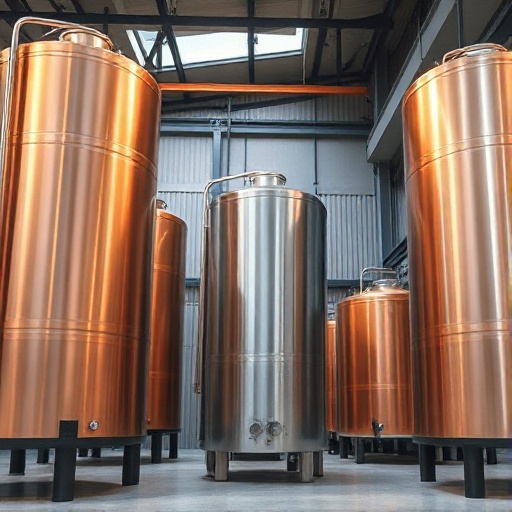
New spinning aluminum alloy formulations incorporate refined grain structures that improve formability during the metal spinning process. Researchers develop variants with higher yield strengths that still allow deep drawing without cracking. These advances expand the range of applications for spun aluminum alloys in high-stress environments such as pressure tanks and structural frames where traditional alloys previously fell short.
Recent developments include scandium-modified alloys that increase yield strength by 40 percent while retaining elongation above 15 percent. Nano-structured 5xxx series alloys under development promise fatigue limits 30 percent higher than current commercial grades. These materials enable thinner walls in high-pressure applications, further reducing weight without compromising safety factors.
Sustainability and Recycling of Spun Metals
Spun aluminum supports closed-loop recycling because the process generates minimal scrap that returns directly to the melt stream. Manufacturers increasingly source recycled aluminum content without compromising mechanical properties of the finished spinnings. Energy-efficient spinning equipment further reduces the carbon footprint compared with casting or extensive machining operations, aligning production with stricter environmental standards across industries.
Modern spinning operations achieve scrap rates below 5 percent, with all trim and turnings remelted in-house. Recycled content levels of 70–90 percent are now common without measurable loss in formability or corrosion resistance. Electrically driven CNC lathes consume 40 percent less energy than older hydraulic models, supporting corporate sustainability targets and qualifying for environmental certifications such as ISO 14001.
The Role of Copper in Spun Aluminum Alloys
Copper additions to spun aluminum alloys enhance strength and machinability while preserving the lightweight advantage. Controlled copper levels improve fatigue resistance in cyclic loading applications such as rotating machinery housings. These modified alloys maintain excellent corrosion performance when properly heat-treated, giving designers more options when specifying spun aluminum for demanding marine or chemical processing equipment.
Alloys such as 2024 and 2219 incorporate 3.8–4.9 percent copper to achieve tensile strengths above 60 ksi after spinning and aging. Copper also refines chip formation during any secondary machining, reducing tool wear. When protected by cladding or anodizing, copper-bearing alloys demonstrate corrosion rates comparable to non-copper grades in salt-spray testing exceeding 1,000 hours, broadening their suitability for offshore platforms and chemical reactors.